Frost on the Saddle: Reading the Signs Before You Wake an MV Agusta
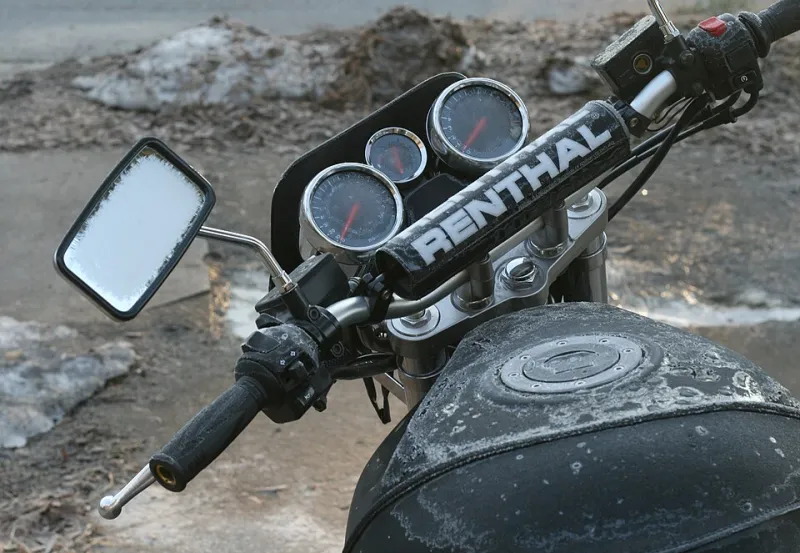
Photo: Ildar Sagdejev (Specious), CC BY-SA 4.0, via Wikimedia Commons
There is a particular stillness to a British winter morning. The garage door is stiff, the windscreen is opaque, and the MV sits under its cover looking like it has no intention of joining you. You are already late. The temptation is to stab the starter, blip the throttle and prove something. Resist it. A cold start is not a test of nerve. It is a conversation, and the bike speaks first.
As I write this in November 2026, the forecast has that familiar mix of damp air, salt on the A-roads and a temperature hovering just above freezing. That is exactly when an MV Agusta rewards a little discipline. Not cosseting, not a heated garage and a cup of tea while the battery trickles — just a few sensible checks and a refusal to confuse noise with progress.
The battery has the first word
Modern MV Agustas do not have a kickstart, whatever the romantic version of motorcycling tells you. The starter button is the first real test, and it begins with voltage. A rested, healthy battery should sit around 12.6V or a little above. If the dash looks dim, the screen resets slowly or the starter turns with a lazy groan, stop. Cranking a cold engine with a weak battery is how you turn a minor inconvenience into a solenoid, a starter relay or a very flat afternoon.
Cold oil is thicker, and the cranking load is higher. If the engine does not catch within a few seconds, do not keep prodding the button like a lift call. Let it rest, check the voltage, and reach for a proper tender or a jump pack with the right precautions. A lithium-friendly charger is not a luxury on a bike that spends weeks under a cover; it is basic ownership. And no, revving it while the battery struggles will not impress anyone, least of all the ECU.
Condensation is the quiet enemy
Frost gets the attention, but damp does the damage. A garage that warms and cools with the weather is a condensation chamber. You will see it on the inside of the screen and the clutch cover, and it is happening inside the engine and exhaust too. Short winter runs are brilliant for morale but terrible for moisture. The exhaust never gets hot enough to dry out, the oil collects emulsion, and the bike sits wet in the cold.
If you can, give the MV a proper run rather than a two-minute idle. Get the oil up to temperature, let the exhaust heat through, and then put it away dry. If a run is not possible, ventilate the garage, use a breathable cover rather than a plastic sheet, and accept that the battery tender is doing more for the bike than a weekly stationary warm-up. Idling in the cold is not a cure; it is a moisture generator with a soundtrack.
The warm-up myth, retired
Let us settle this. You do not need to sit on the drive for ten minutes while the engine idles. Modern fuel injection and modern oils do not need it, and prolonged idling from cold is not kind to an engine. Start it, let the oil pressure settle and the fast idle drop, then ride gently. The first few miles are the warm-up. Keep the revs low, use the gearbox smoothly and let the coolant and oil temperatures climb together.
The trap is the dashboard. Coolant temperature can look normal while the oil is still cold. On a frosty morning, that discrepancy is huge. Treat the first ten minutes as a mechanical handshake. No redline, no aggressive downshifts, no showing off at the lights. The MV will feel tight and slightly reluctant. That is not a fault. That is physics.
Tyres need heat, not hope
Summer tyres on a British winter road are a negotiation. Below about 7°C, even a good road tyre loses the easy grip you remember from July. Check pressures cold, because the numbers rise as you ride and the cold morning figure is the one that matters. Do not drop them to find grip; that just makes the bike slower to steer and more prone to squirming.
The first mile is for the tyres and the brakes. Use the front brake gently to clear surface rust from the discs. Lean less. Look further ahead. Gritting leaves a fine, slippery dust at junctions, and wet leaves on a B-road can undo a confident line in an instant. An MV Agusta is not fragile, but it is precise. Precision needs feedback, and feedback needs temperature.
Fuel, fast idle and the smell test
A modern MV should not need a choke, because it does not have one in the old sense. It has a fast idle and a cold-start strategy. If it fires and then dies, do not chase the throttle. Let the system do its job. If you can smell raw fuel, stop cranking. A flooded engine and a cold morning are a miserable combination.
Winter also punishes stale fuel. If the bike has been sitting since October, a fresh tank of the good stuff is cheap insurance. Add a stabiliser if it will sit again. And if the dash throws a warning, believe it. The electronics on these bikes are not being dramatic. They are telling you something.
The first mile is the ritual
Before you roll away, do the small things: check the tyres, the chain, the lights and the mirrors. Clear the visor. Let the engine settle. Then ride the first mile like you are introducing yourself to the road again. Smooth inputs, early braking, gentle steering. By the time the oil is warm and the tyres are working, you will have forgotten the frost. That is the point.
So no, a cold morning does not require mollycoddling. It requires attention. An MV Agusta will start, run and shine in British winter conditions — but it will not pretend the laws of physics have been suspended. Read the signs, respond calmly, and save the drama for the road ahead.