Second-Hand Soul: A Realistic Guide to Buying a Used MV Agusta in Britain
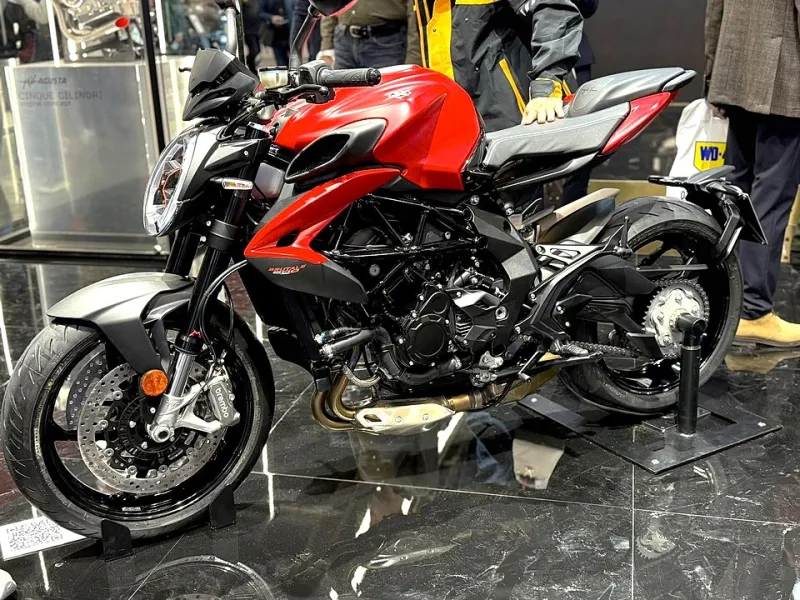
Photo: MotorideSA, CC BY-SA 4.0, via Wikimedia Commons
Buying an MV Agusta second-hand is one of the great bargains in motorcycling — and one of the quickest ways to empty a savings account if you shop with your ears instead of your eyes. The UK's used market has matured: there are more independent specialists than there were a decade ago, parts channels have improved, and a well-kept F3 or Brutale is a genuinely usable British bike. The flip side is that plenty of neglected examples sit in garages wearing optimistic price tags.
Here's how to tell them apart.
Paperwork before paintwork
Start with the history file, not the bodywork. A stamped service book is table stakes; what you actually want are itemised invoices with mileage and dates. MV ownership tends to attract people who keep receipts, so a seller with a bulging folder is a good sign and a seller with "the book's somewhere" is not.
Do the free checks before you leave the house: MOT history online (look for advisories repeated year after year, and for long gaps in annual mileage), a paid HPI-style check for outstanding finance and write-offs, and a VIN comparison across the frame stamp, the V5C and the paperwork. On faired models, ask when the bodywork was last off — it's the only honest way to see the front of the engine, the coolant hoses and the frame rails.
Which MV suits which budget
The range splits fairly cleanly into four characters.
F3 675 and 800. The middleweight triple sports bike. Early 675s are the entry point; later 800s are the sweet spot for road pace. Sharp, narrow, and surprisingly civil in town — the riding position is committed without being punishing. Scrutinise fairing panels for crash damage and the frame for the marks of a track-day spill.
Brutale 675, 800 and 1090. Naked, upright, and for many riders the most sensible MV to own. The 800 is the pick for British roads: enough torque to be lazy, light enough to be entertaining on a B-road. The four-cylinder 1090 is a different animal — more grunt, more thirst, more weight, and far more temptation to spend on tyres.
Turismo Veloce 800. MV's sport-tourer and arguably the most underrated bike it has built. Semi-active suspension on Lusso variants, usable luggage, a riding position that survives a motorway. Values have softened, which makes it the value buy if you want distance rather than drama — but the electronics are the most complex in the range, so testing every mode and menu matters.
F4. The halo bike. Four cylinders, underseat pipes on the earlier cars, and a running cost to match. Buy on condition and provenance, never on price. Cheap F4s are cheap for a reason.
Depreciation has done most of the work for you. MVs shed a large slice of their new price early, then flatten out; limited editions and late RR and RC cars buck the trend. The practical upshot is that a careful private buyer can now reach a genuinely exotic machine for sensible money — but the running costs never depreciate.
The inspection: what actually wears
A proper pre-purchase inspection is worth every penny, though you can screen a lot yourself.
- Valve clearances and cam chain. The triples need their clearances checked on schedule, and it's a labour-heavy job at a franchised dealer. Ask for evidence. A noisy top end from cold deserves suspicion, not a shrug.
- Charging system. Regulator and stator failures are a recurring theme across Italian exotica. Bring a multimeter: check battery voltage at rest and again at around 3,000rpm.
- Electronics. Cycle every mode, every menu, the quickshifter, cruise control where fitted, both levers and the dash. Water creeping into connectors is a British speciality.
- Suspension and brakes. Fork seals, shock linkage bearings, disc bobbins that no longer float, pads wearing unevenly enough to suggest a sticky caliper.
- Exhaust valve. Where a flap is fitted, they seize through disuse. Listen for the servo cycling at ignition-on.
- Wheels and hubs. Especially on spoked or single-sided set-ups. Check for corrosion and bearing play.
- Corrosion. Gritted roads are merciless. Look at fasteners, the swingarm, the underside of the tank, the shock and any steel bracketry.
Ride it properly — twenty minutes minimum, from cold. Rattles, a snatchy throttle, a habit of finding false neutrals or a dragging clutch are all things a five-minute spin will hide.
The money after the money
Budget 10–15 per cent of the purchase price as a first-year contingency. A major service with valve clearances, fresh rubber and a chain and sprocket kit can comfortably reach four figures before anything has actually broken. Insurance on an exotic can be eye-watering for younger riders, and parts lead times from Italy occasionally test patience — although the UK dealer network and the independent specialists are far better than the internet would have you believe.
Buy the best example you can afford, keep every receipt, and use it. These are not museum pieces, and the ones that get ridden are the ones that stay healthy.