City Limits, Clear Rules: Riding Your MV Agusta Into Britain’s Clean Air Zones

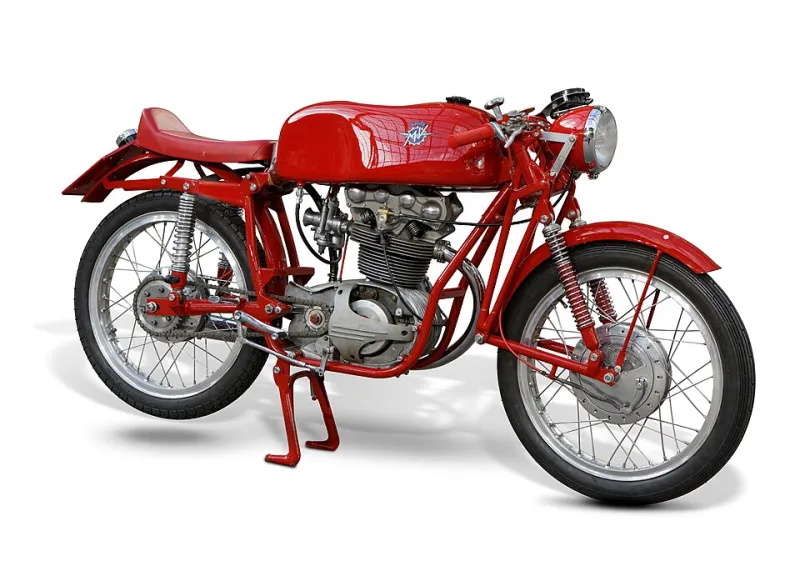
Photo: Alexander Migl, CC BY-SA 4.0, via Wikimedia Commons
Cities are where motorcycling often makes the most sense: filtering through traffic, parking in spaces cars cannot use, arriving at a bike night with the Varese soundtrack still ringing in your ears. They are also where Britain’s clean air rules become a practical ownership issue. The good news is that most modern MV Agustas are comfortably compliant. The less good news is that “most” is not “all”, and Britain does not run one neat national scheme.
The map is not the territory
London’s Ultra Low Emission Zone is the one riders tend to know. It operates 24 hours a day across all London boroughs and does apply to motorcycles. The standard is Euro 3, which generally means a bike first registered from around 2007 onwards is likely to be compliant — but “likely” is not a guarantee. A bike can be registered later and still fall short, or be an import with paperwork that needs checking.
Outside London, the picture is patchier. Birmingham, Bath, Bristol, Sheffield, Newcastle, Bradford and other urban areas have their own clean air arrangements, and they do not all treat motorcycles the same way. Some schemes charge only certain vehicle classes; some exempt motorcycles entirely; some have different boundaries and operating hours. Do not assume that because London charges bikes, every city does. Equally, do not assume that because a city has a clean air zone, your MV is automatically in scope.
The only reliable approach is to check the specific scheme before you ride into it. Council websites and the national government clean air zone pages are the place to start. For London, use the TfL vehicle checker with your registration number. For anywhere else, find the council’s own checker or exemption guidance. It takes five minutes and saves a very expensive letter later.
Check your MV in five minutes
Start with the V5C. Look at the date of first registration and any emissions information recorded. Then use the official checker for the city you are visiting. If the result says compliant, save a screenshot. If it says chargeable, you have a choice: pay the daily fee, change your route, or use another bike.
For older MV Agustas, this is worth doing properly. Early F4 and Brutale models from the mid-2000s are now genuine modern classics, but not every example will meet a Euro 3 motorcycle standard. A 2005 F4 750 may be a beautiful thing, but charm does not override an ANPR camera. Check the registration against the scheme rather than relying on the model’s reputation or the year on the number plate.
If you are importing a bike, or you have a machine with a replacement engine or unusual registration history, the certificate of conformity and V5C details matter even more. Historic tax class can bring exemptions in some schemes, but that is a 40-year-old vehicle rule and not a get-out for most MV owners. Treat it as a specialist query, not a shortcut.
What it costs if you get it wrong
In London, a non-compliant motorcycle is subject to the daily ULEZ charge. The amount is not huge in isolation, but it adds up quickly if you commute or visit regularly. Set up Auto Pay if you know you will need it, and keep a note of which days you have paid. The congestion charge is a separate matter, and motorcycles are exempt from it, but that does not make you exempt from ULEZ. Riders often blur the two. Do not.
Outside London, penalties and charging structures vary by scheme. Some zones issue penalty charge notices; others simply do not charge motorcycles at all. Again, the local council’s guidance is the source of truth. If a website looks like a third-party payment portal, check it against the official council page before handing over card details.
Planning a city ride without the guesswork
If your MV is compliant, the practical stuff is familiar: plan your parking, check the event location, and give yourself time to gear down and cool off in traffic. If it is not compliant, do not write off the ride. Use a park-and-ride outside the zone, find secure parking on the boundary, or take the train for the final stretch. For urban bike nights and shows, check whether the organiser has arranged exempt parking or a specific arrival route. Some venues sit just inside a charging boundary; some sit just outside and become a handy meeting point.
Satnav can be unhelpful here. A route that looks direct may clip a clean air zone boundary, especially in cities where the zone is not a simple ring road. Preview the route on a map, not just the turn-by-turn directions, and mark the boundary if you are visiting somewhere unfamiliar. If you are riding in a group, make sure everyone has checked their own bike. One non-compliant machine can hold up the whole ride or leave a friend facing a charge.
The clean-conscience part
Compliance is the floor, not the ceiling. A well-serviced MV Agusta runs cleaner and smoother than a neglected one, and that matters in town. Keep the air filter, plugs and fuelling in order, run the correct tyres at the right pressures, and avoid sitting on the revs outside a café. The occasional Italian V-twin or inline triple bark is part of the appeal; constant noise and unnecessary idling are not. Ride the art, own the legend — and do it with a bit of consideration for the street you are in.
For 2026, the sensible routine is simple: check the city, check the bike, check the cost. Britain’s clean air rules are not designed to keep motorcycles out of cities. They are designed to clean up the air, and the details vary. With five minutes of preparation, your MV Agusta can go where it belongs — into the city, onto the street, and into the middle of the ride.