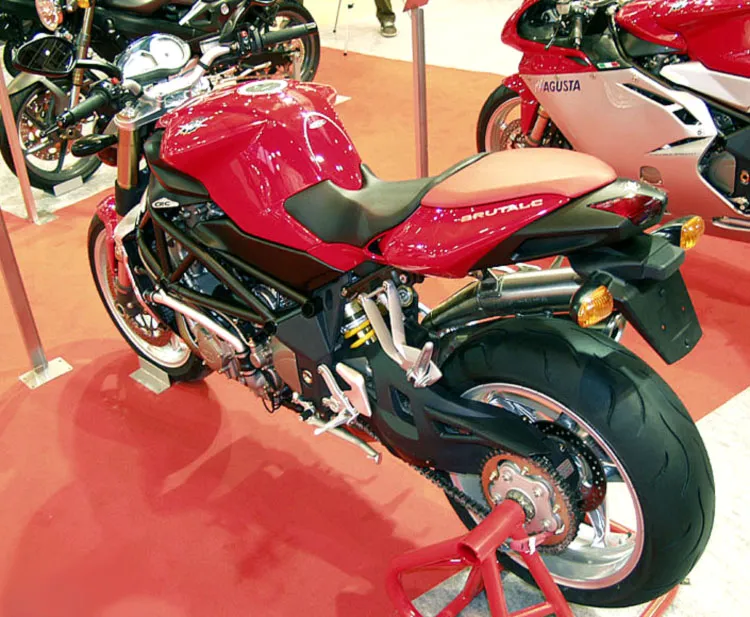
Decibel Discipline: Keeping the MV Soundtrack Legal on Road and Circuit

Photo: Lothar Spurzem, CC BY-SA 2.0 de, via Wikimedia Commons
Nobody buys an MV Agusta and then complains about the noise. The intake honk of the triple, the flat-four bark of an F4 coming onto the cam — it's a huge part of why these bikes exist. But Britain in 2026 is a noise-sensitive place, and the gap between "glorious" and "flagged" is narrower than most owners expect.
This is the practical version: what testers and marshals actually measure, what you can change, and how to keep the drama without the admin.
What an MOT tester is really checking
The exhaust test on an MOT isn't a decibel meter. It's a visual and subjective assessment: is the system secure, does it leak, is it excessively noisy for its type, and does it carry the relevant approval marking? A can stamped "not for road use" or "race use only" is an instant problem, and so is a bike that's obviously louder than the tester thinks it should be.
The practical rule is simple. Keep the baffle in, keep the standard system or a properly marked replacement, and the MOT is a non-event. Owners who swap in a straight-through link pipe for the summer and forget to put it back by test time are the ones who end up having the conversation.
Static tests, drive-by meters and the track day reality
Circuit noise testing comes in two flavours and they are not the same thing.
A static test happens before you're allowed out. A meter is held at a set distance and angle from the tailpipe — typically half a metre at 45 degrees — while the engine is held at a specified fraction of maximum rpm. It's crude, repeatable, and usually generous to a well-maintained bike.
A drive-by measurement is the one that catches people. Fixed or mobile meters sit trackside, usually on a straight where you're hard on the throttle, and they record what the bike actually sounds like under load. Induction roar, exhaust valve position and gearing all feed into it. A bike that squeaks through the static test can still trip a drive-by meter in third gear with the throttle pinned.
Limits vary by venue and are revised from time to time, so always check the circuit's own published figures before you book rather than trusting a forum post from years ago. As a broad picture: the strictest airfield-style venues sit at the lower end of the range with tight drive-by thresholds, most established race circuits publish a static limit somewhere in the high 90s to around 105 dB(A) with a drive-by figure typically just above it, and everything in between exists. Some circuits run quieter weekday sessions with lower limits than weekend ones.
Baffles, dB killers and the swap kit
The cleanest solution is also the oldest one: keep the original system and run a slip-on with a removable baffle. On many MV models that's a short job with a couple of bolts, which means you can run the loud set-up for a noisy-friendly track day and refit the quiet one for the MOT, a sensitive circuit or a trip through a quiet village.
A few things worth knowing before you spend:
- Removing a baffle can change fuelling. Some systems want a remap or a race ECU to run properly without the insert, and that map may not be something you want on the road.
- Check the insurance position. A declared aftermarket exhaust is usually fine; an undeclared one that materially changes the bike can cause problems at claim time.
- Mufflers have a service life. Packing material degrades, and a can that passed two seasons ago may well fail now. Repacking is inexpensive compared to a failed noise test and a wasted entry fee.
- Valve systems matter. On models with an exhaust flap, a seized servo can leave the bike permanently loud — and permanently failing.
- Induction noise counts. An open airbox or a race filter can push a bike over a drive-by limit even with a standard can fitted. Marshals hear the whole bike, not just the tailpipe.
Roads, neighbours and the roadside
On the public road the legal position is that your exhaust must not have been altered to increase noise, and it must be properly maintained and marked. Enforcement rarely involves a meter, but it doesn't need to: a visibly race-derived system and an anti-social riding style attract attention that no baffle can fix.
Roadside noise camera trials have been run in several UK cities in recent years, and the technology is only getting cheaper. Whether or not you ride through an area with one installed, the direction of travel is clear.
Then there's the neighbour question, which is where most complaints actually originate. A few habits go a long way: ride away gently from cold rather than idling on the drive for ten minutes, close the garage door before you blip it, short-shift through residential streets, and don't treat a 6am Sunday start as a personal concert. The MV will still sound magnificent — just later, and further from anyone's bedroom window.
The verdict
You can absolutely have both. A well-maintained standard system or a quality aftermarket can with the baffle in will pass an MOT, clear most static tests and keep you welcome on the average track day. Keep the loud bits for the places that ask for them, and know your circuit's numbers before you load the van.
The soundtrack is part of the legend. Keeping it legal is part of owning it.