Earning the Redline: Running In a New MV Agusta the British Way
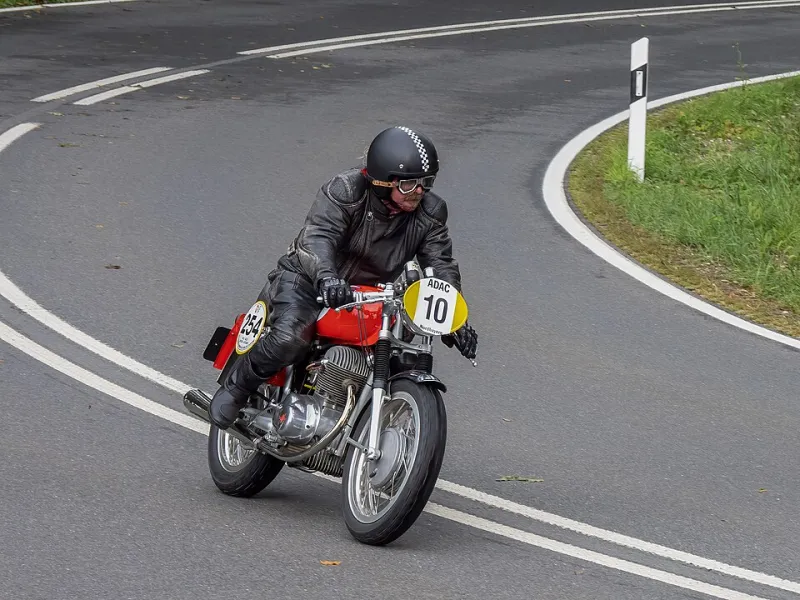
Photo: Ermell, CC BY-SA 4.0, via Wikimedia Commons
There is a particular kind of patience that comes with a new MV Agusta. You have signed the paperwork, heard the engine catch for the first time, and immediately want to disappear towards the nearest mountain pass. Instead, the handbook asks for restraint. The first thousand miles are not an obstacle to the experience; they are the foundation of it. Treat them well and the bike will reward you for years. Treat them carelessly and you may spend the rest of your ownership explaining a noise to a technician.
What the handbook asks — and what it leaves to you
MV Agusta’s own running-in guidance is the place to start, and it is deliberately conservative. Typically it asks for moderated revs, no sustained full throttle, and avoidance of labouring the engine at low speed in a high gear. Those instructions are sensible, but they are written for a generic new motorcycle in a generic climate. Britain in 2026 is neither generic nor predictable. A cold, damp morning in the Peak District is a different proposition from a warm afternoon on the A3, and your run-in should reflect that.
The principle is simple: the engine, gearbox, tyres and brakes all need to settle into one another. You do that by using the bike across a range of conditions rather than by cruising at one speed for hours. A motorway slog to Cornwall at a constant 70mph is not ideal. Neither is a stop-start commute through central London. The sweet spot is a varied diet of A-roads, B-roads and the occasional quiet dual carriageway, with enough corners to work the tyres and enough braking to bed the pads in gently.
Cold starts, damp air and the British run-in reality
A British run-in is rarely a sunlit parade. It is more likely to involve condensation on the seat, a greasy roundabout and a delivery van overtaking on a blind bend. None of that is a reason to baby the bike forever, but it is a reason to warm it properly. Start the engine, let it settle for the time it takes to put on your gloves and helmet, then ride gently for the first few miles. Avoid blipping the throttle to show off to the neighbours. The oil needs to circulate, not perform.
Damp conditions also mean your new tyres need more care than you might expect. New rubber carries release compound and has not yet been scrubbed across its full profile. Take the first 100 miles steadily, especially in the wet, and build lean angle gradually. The same goes for brakes: new pads and discs need a gentle bedding-in period before you ask for maximum stopping power. Find an empty stretch of road and make a series of progressive stops, not emergency ones.
Load, not just revs
The most common mistake during running in is to focus only on the rev counter. Engine load matters just as much. You want to vary the throttle and the gear, allowing the engine to pull cleanly without lugging. On a congested A-road, that might mean short-shifting and using the midrange rather than holding a gear until the redline. On a clear B-road, it means rolling on and off the throttle smoothly, letting the engine breathe across its range.
Avoid sitting at a single speed for long periods. If you are on a motorway, vary your speed slightly and use the gearbox sensibly. If you are in traffic, do not let the engine idle for long periods unnecessarily. And do not be afraid to use the bike properly once it is warm — just save the full-throttle heroics for after the first service. The goal is a bike that has seen a broad range of normal use, not one that has been nursed into a false sense of security.
The track day temptation
Every new MV owner feels the pull of a track day. The first thousand miles can feel like a countdown to the first full-throttle lap. Resist it. A track day before the first service is not the place to discover a manufacturing fault, and sustained high revs and heavy braking are exactly what the handbook asks you to avoid. Book the track day for after the run-in, once the bike has had its first service and you have a baseline for how it behaves. It will be a better day because of it.
A 2026 checklist for before and after the first service
Before the first service, check the obvious things regularly. Tyre pressures matter more than you think during run-in, because they affect how the tyres bed in. Check oil level, coolant level and brake fluid. Look for leaks or weeping around the engine cases. Clean and lubricate the chain if your model has one. Wash the bike — not just for vanity, but because it makes you look closely at the fasteners, the paint and the components.
After the first service, the bike should feel freer. The oil will have been changed, the fasteners checked and the diagnostic systems interrogated. Ask the technician what they found. Was there any metallic residue in the oil? Were any adjustments needed? Keep the invoice and the service record. If you are running in a 2026 model with electronic rider aids, confirm that any software updates have been applied. And take the time to re-check tyre pressures and chain tension yourself once you are home.
Documenting the first thousand
A running-in record is not just for warranty claims. It is evidence of care, and that matters at resale. Keep a simple log: date, mileage, conditions, any observations. Photograph the odometer at the first service. Keep receipts for oil, filters and any early accessories. If you have had a dealer service, make sure the book is stamped and the invoice is stored with the bike’s documents.
MV Agusta ownership is about more than the machine. It is about the story you build with it. The first thousand miles are the opening chapter — cold starts, damp roads, a cautious track day booked for later. Do them properly and you will not just have a bike that runs well. You will have a bike that feels like yours.
Ride the art. Own the legend.